

Flat Farmland Values Are Not Flat
When adjusted for inflation, land values are down

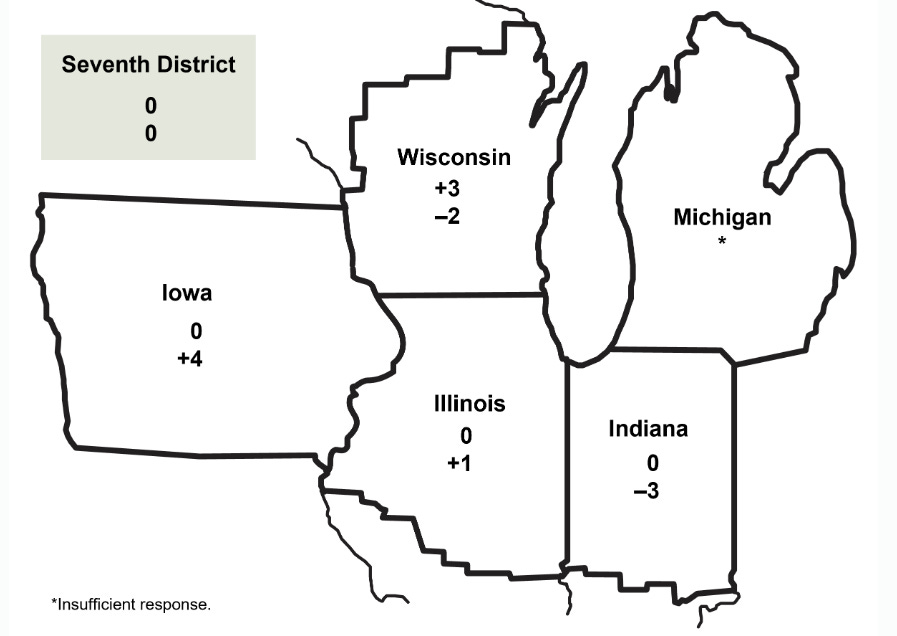
The Chicago Fed released its August AgLetter last week, and the headline is that Midwest farmland values did not move in the second quarter. Unchanged from the first quarter. Unchanged from a year ago.
That is the wrong number to look at.
Adjusted for inflation, District farmland values fell 3.7% over the last year. That is the largest real decline since the third quarter of 2016. Your balance sheet did not change. What the land will buy did.
Run it on real ground
Take 160 acres of good Illinois ground worth $12,000 an acre. That is $1,920,000, and it was $1,920,000 a year ago too. Nothing to report to the banker.
Except the same $1,920,000 buys about $71,000 less than it did last August. The land held its number and lost its purchasing power. If your operation is counting on appreciation to cover the equipment line or fund the buyout of a sibling, a flat year is a year you fell behind.
By state, Illinois and Iowa were up from a year ago while Indiana and Wisconsin were down. Michigan did not draw enough survey responses to report.
Farmers are not the ones holding values up
This is the part of the survey worth reading twice. Lenders credited investment activity for data centers and solar and wind farms with helping hold values up.
That is not farm income buying farm ground. That is somebody who has no intention of raising a crop setting the floor under your comps. Keep it in mind the next time an appraisal comes across your desk for a gift or an estate. The sale down the road may say more about a transmission line than about corn.
The stress is in the credit file
The land number is calm. The loan numbers are not.
Farm loans with major or severe repayment problems reached 3.7% in the second quarter, up from 2.9% a year earlier. That is the highest reading since 2020.
The survey indexes tell the same story. On these, 100 means no change from a year ago:
Repayment rates: 73. Not one lender reported repayment running better than a year ago. Twenty-seven percent said it is running worse.
Renewals and extensions: 124. Loans are getting pushed rather than paid.
Loan demand: 111. Operations need more money.
Fund availability: 90. Lenders have less to give them.
More demand against less supply, with repayment already slipping. That combination is how a slow year turns into a hard one.
Interest rates ticked up slightly from the first quarter in nominal terms and came in lower in real terms: operating loans averaged 7.12%, feeder cattle 7.14%, and farm real estate 6.79%.
Nobody expects a move
Only 5% of lenders expect farmland values to rise in the third quarter. Eighty-one percent expect them to sit right where they are.
Look at what lenders expect to be lending for. Operating loans, feeder cattle loans and FSA-guaranteed loans are all expected to run higher. Farm machinery, grain storage construction and farm real estate are all expected to run lower.
Borrowing for inputs is up. Borrowing for iron is down. That is a farm economy funding this year’s crop instead of next decade’s capacity, and it tells you more than the land number does.