



If you have sorghum base in the Plains, 2025 is a PLC year — full stop. I ran the ARC-CO versus PLC numbers county by county across the seven big sorghum states, both dryland and irrigated, and the result is as one-sided as it gets: PLC beats ARC-CO in all 673 county-and-practice combinations. Every one. Sorghum is the mirror image of dry peas, where ARC-CO won almost everywhere.
Here is the takeaway. On average, PLC pays about $23 an acre more than ARC-CO across these counties, and in the higher-yielding stretches of Nebraska it is $70 an acre more. The reason is a price story, and the ARC cap is what keeps ARC from ever catching up.
Why PLC runs away with it
Sorghum’s problem in 2025 is price, not yield. The projected MYA price is $3.55 a bushel, well under the $4.67 effective reference. That gap is the PLC payment rate: $1.12 a bushel, guaranteed, paid on 80% of your benchmark yield and 85% of base acres. It does not care what your combine did — if the price is down, PLC pays.
ARC-CO is a revenue program, and it is capped. For 2025 (with the OBBBA changes) it pays the guarantee — 90% of benchmark revenue — minus your county’s actual revenue, but never more than 12% of benchmark revenue. In a low-price year that 12% ceiling simply is not enough to clear the fat PLC check sitting next to it.
Chase County, Nebraska — the crop was great and ARC still paid nothing
The cleanest illustration is a county that raised a good crop:
Benchmark yield: 57.9 bu; benchmark price $5.30 → benchmark revenue $307/acre
Guarantee (90%): $276/acre
2025 yield: 99.2 bu — a strong crop — at $3.55 → actual revenue $352/acre
Because county revenue beat the guarantee, ARC-CO pays $0. But price fell below the reference, so PLC pays about $44 an acre on the same ground. The farmer with a good crop and a bad price gets nothing from ARC and a full check from PLC.
Now flip it to a short crop. In Finney County, Kansas (irrigated), revenue did fall below the guarantee and ARC triggered — but the 12% cap held the ARC payment to about $55 an acre, while PLC paid $77. Short crop or full crop, PLC wins, and the cap is the reason ARC cannot keep up.
The same result across every state
Dryland and irrigated, big states and small, the winner never changes:
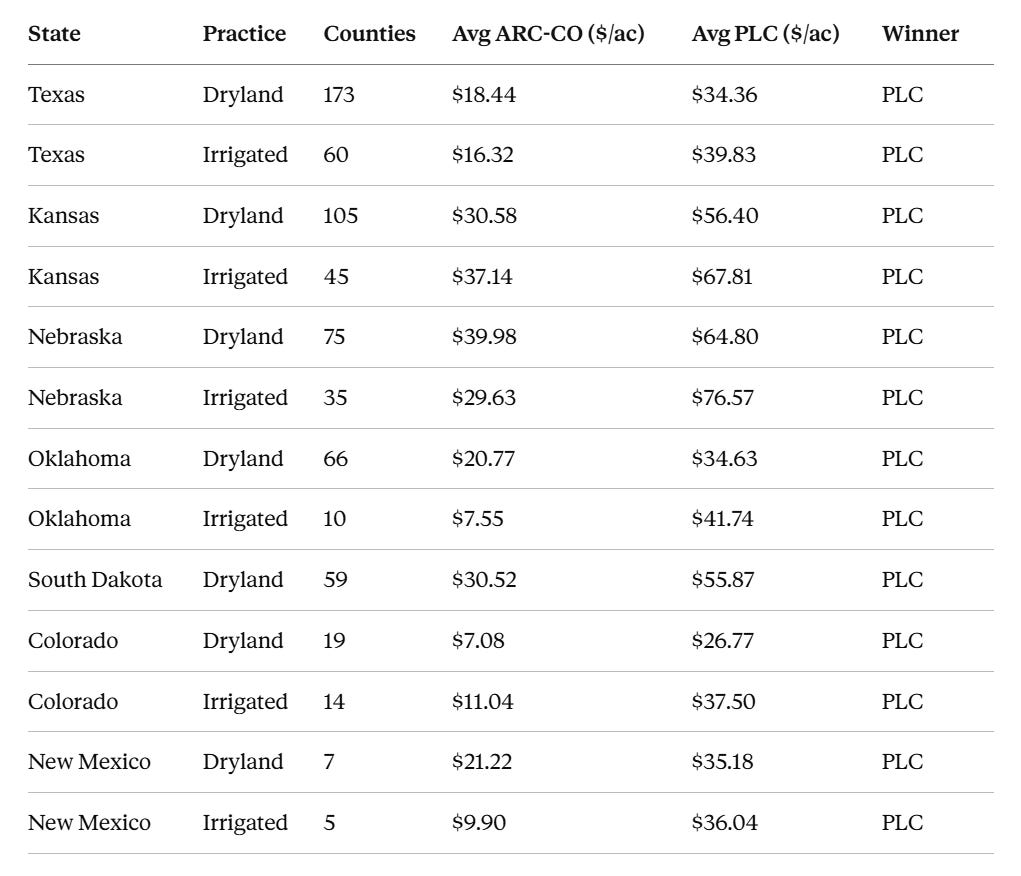
Where a county reported two RMA yields, the lower is dryland and the higher is irrigated, and each practice is matched to the FSA benchmark for that practice. South Dakota had no irrigated sorghum counties in the data, so it shows dryland only.
The bottom line
For 2025 you do not have to choose — OBBBA pays the higher of ARC-CO or PLC automatically, no election. So, every sorghum producer in these states collects the PLC figure whether they ever thought about it or not. But it is worth understanding why it lands this way: a low sorghum price hands PLC a $1.12 rate, and the ARC-CO 12% cap means the revenue side can never close the gap. When the price is this far under the reference, PLC is the program, and ARC is just along for the ride.
Know your county’s benchmark and your own PLC yield before you plan around a number. The county spreadsheets behind this let you drop in your base acres and PLC yield and see the higher-of figure for your operation.
Estimates use the official FSA 2025 ARC-CO grain sorghum benchmark yields, real RMA harvested county yields, the $5.30/bu benchmark price, the $4.67 effective reference, and the projected $3.55/bu MYA price.
Here are the spreadsheets (for paid subscribers only):
