

Now For Soybeans
We provide the Soybean numbers


In today’s post we provide the soybean base acre yields and production.
List 1: Top 10 counties by soybean base acres
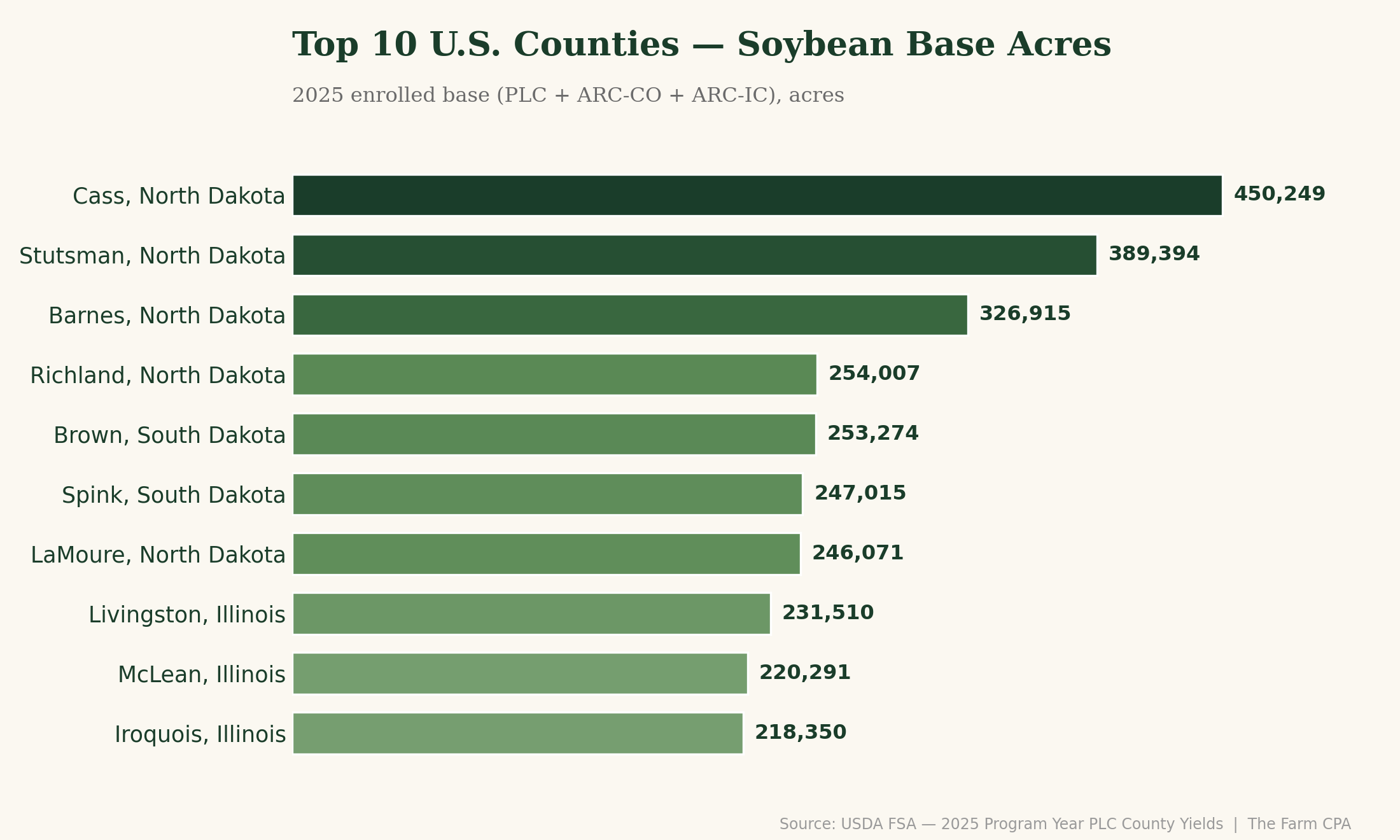
This is North Dakota’s list. Five of the top ten counties are in North Dakota, with two more in South Dakota — the northern Plains carry seven of the ten. Cass County, North Dakota sits on top with 450,249 base acres, the single largest soybean base of any county in the country. But notice the PLC yields behind those northern Plains giants: Cass is enrolled at just 34.1 bushels, and its neighbors run in the low 30s. The three Illinois counties at the bottom of the list (Livingston, McLean, Iroquois) carry far fewer base acres but post yields in the high 40s and low 50s. Hold that thought. Total U.S. soybean base runs about 52.6 million acres — the smallest of the three crops we’ve looked at.
List 2: Top 10 counties by Total Soybean PLC Yield
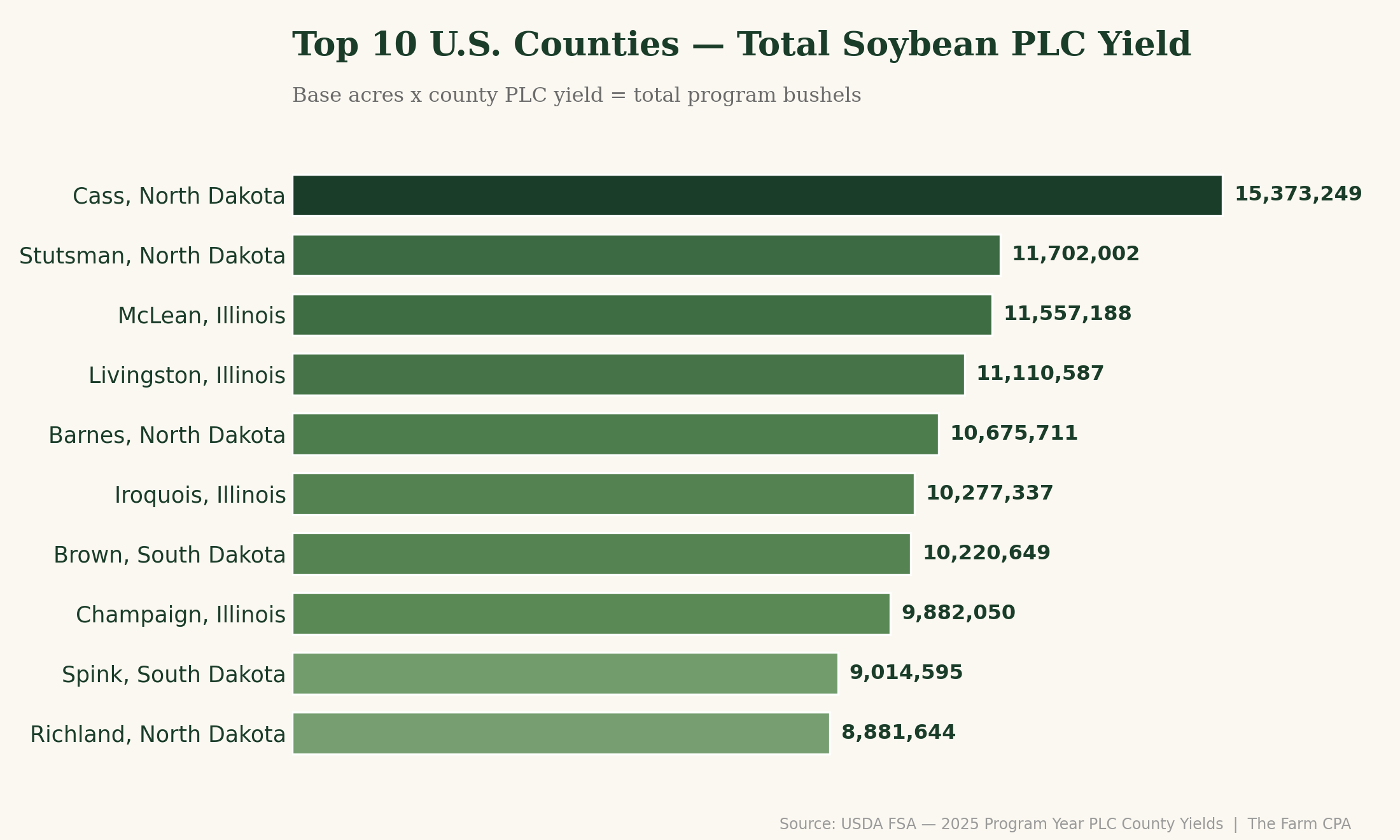
Cass County, North Dakota stays at number one and it isn’t close — 450,249 base acres at even a modest 34.1-bushel yield still produces 15.4 million program bushels, nearly a third more than anyone else. That’s the power of sheer base. Yield does some work further down: Champaign, Illinois muscles into eighth on a 51.3-bushel yield despite never appearing on the base-acre list, bumping LaMoure, North Dakota out. But unlike corn, no Illinois county climbs to the top here. When your base is that big, volume wins.
List 3: Top 10 counties by soybean PLC yield per acre
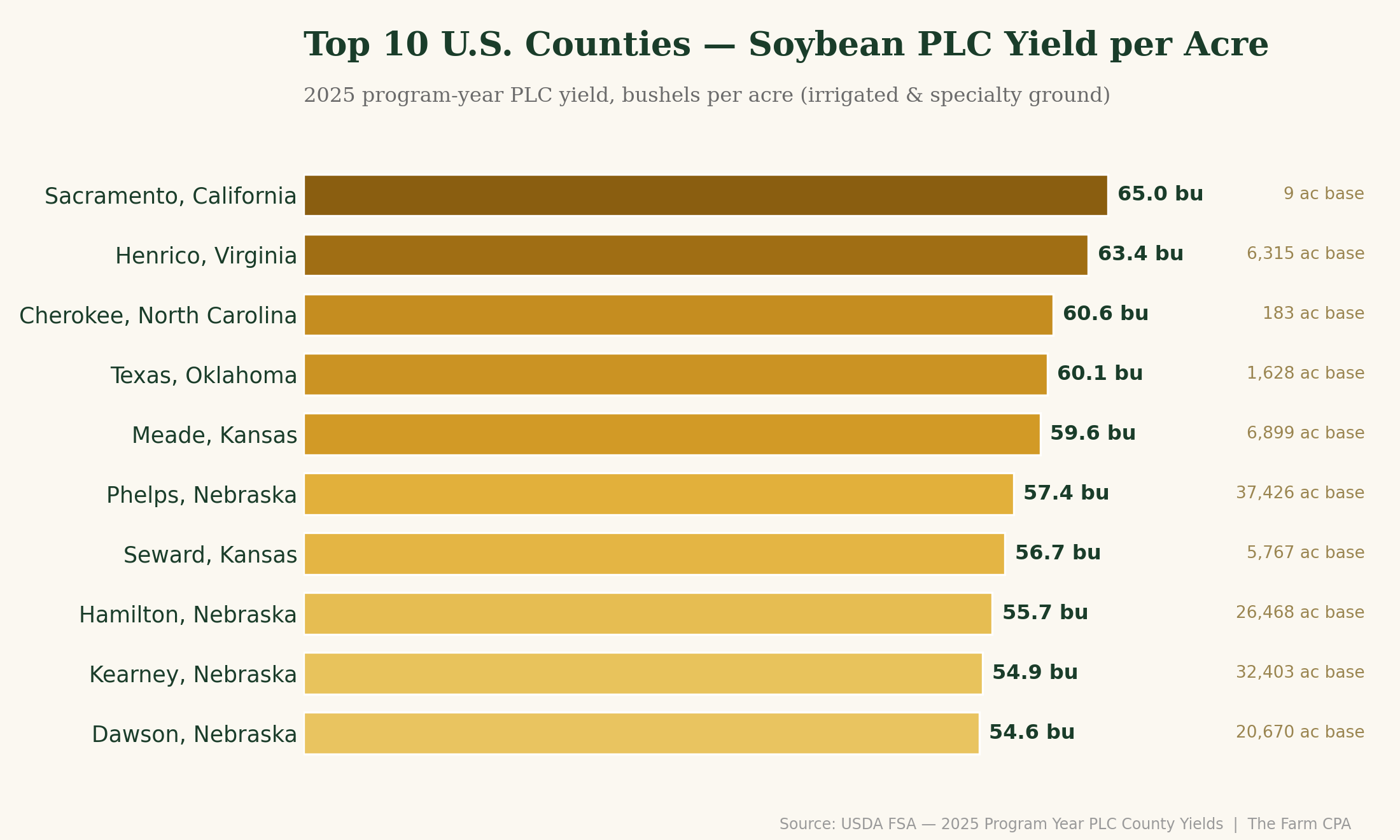
The number-one slot is almost a punchline: Sacramento County, California shows a 65.0-bushel PLC yield on all of 9 base acres — essentially one irrigated field, not a soybean economy. That’s the per-acre list in a nutshell; the very top is tiny specialty ground.
But look who fills the rest: Nebraska, four counties, all irrigated. And these aren’t postage stamps. Phelps County runs 57.4 bushels on 37,426 base acres, Kearney 54.9 on 32,403, Hamilton 55.7 on 26,468. This is the soybean version of the Hartley, Texas story from the corn post — center-pivot ground in the Platte Valley that delivers both the yield and the acreage.
In tomorrow’s post we will review the cotton numbers.